FEMS App Multi-Use
1. Introduction
Dear customer,
Thank you for choosing the "FEMS App Multi-Use". You are welcome to send us your suggestions so that we can further improve the quality of our products.
2. Description
FEMS App Multi-Use combines functions of the energy storage system with those of various FEMS Apps. FENECON GmbH selects and configures the FEMS Apps according to customer requirements. The FEMS App Multi-Use is designed for industrial applications and offers a flexible solution for integrating energy storage systems into complex energy management systems—it can even be described as the “Swiss Army knife of FEMS Apps.”
The following FEMS Apps can be combined:
-
Self-Consumption Optimization
-
Peak Shaving
-
Manual Charging and Discharging
FEMS App Multi-Use is compatible with the following FENECON systems:
| System | Compatibility |
|---|---|
FENECON Industrial S |
|
FENECON Industrial M (452-904) |
|
FENECON Industrial L |
|
FENECON Industrial XL |
2.1. Use cases
Click on the text to expand it.
Case Study — Foundry
Background:
-
Annual electricity consumption: 2,400 MWh
-
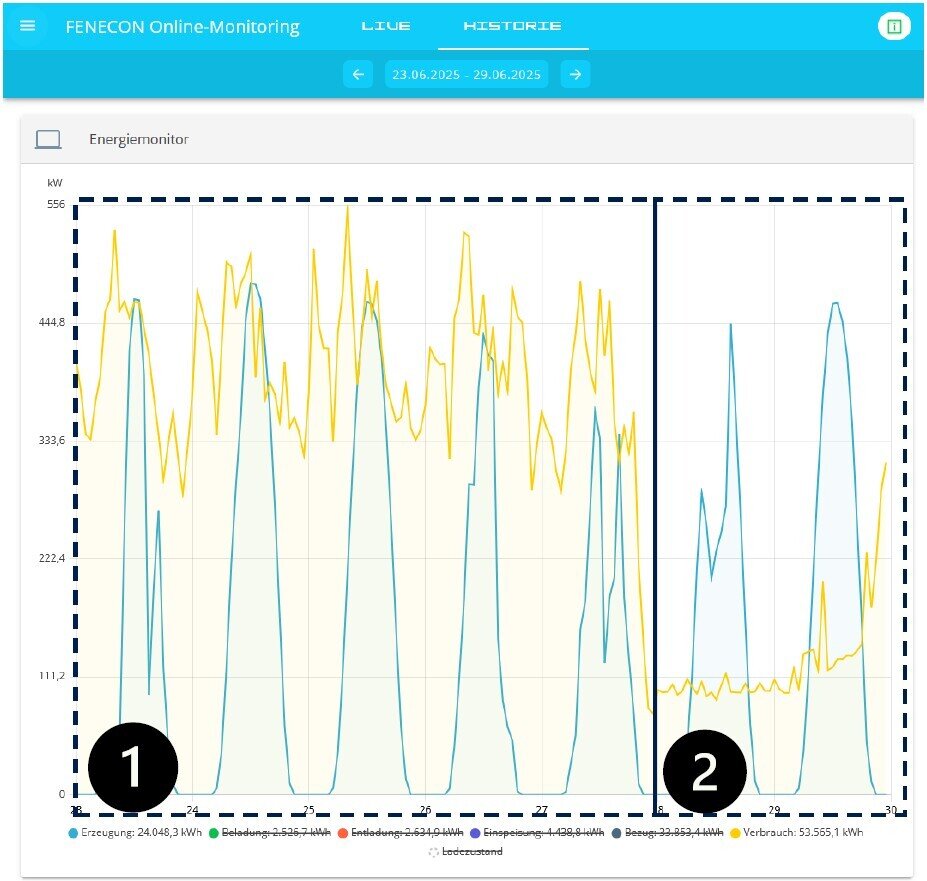
Monday–Friday: 500–700 kW melting processes
-
Weekends: 100–120 kW base load
-
Employee vehicle charging with 8 charging points
-
-
1,000 kW grid connection
-
450 kWp rooftop PV system
-
System: FENECON Industrial M 368 kW/656 kWh
-
Behind-the-Meter system for energy cost optimization
-
Challenges:
|
|
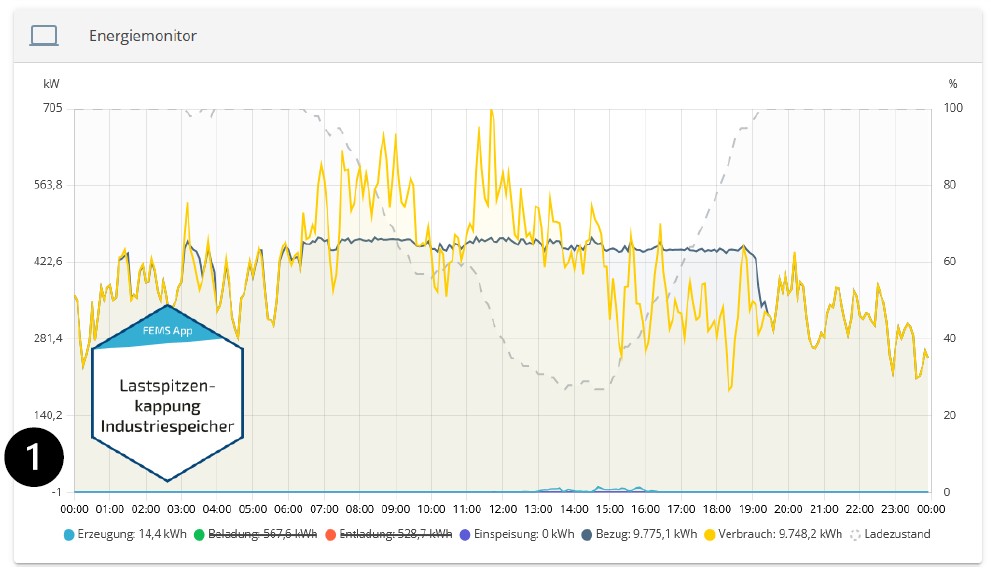
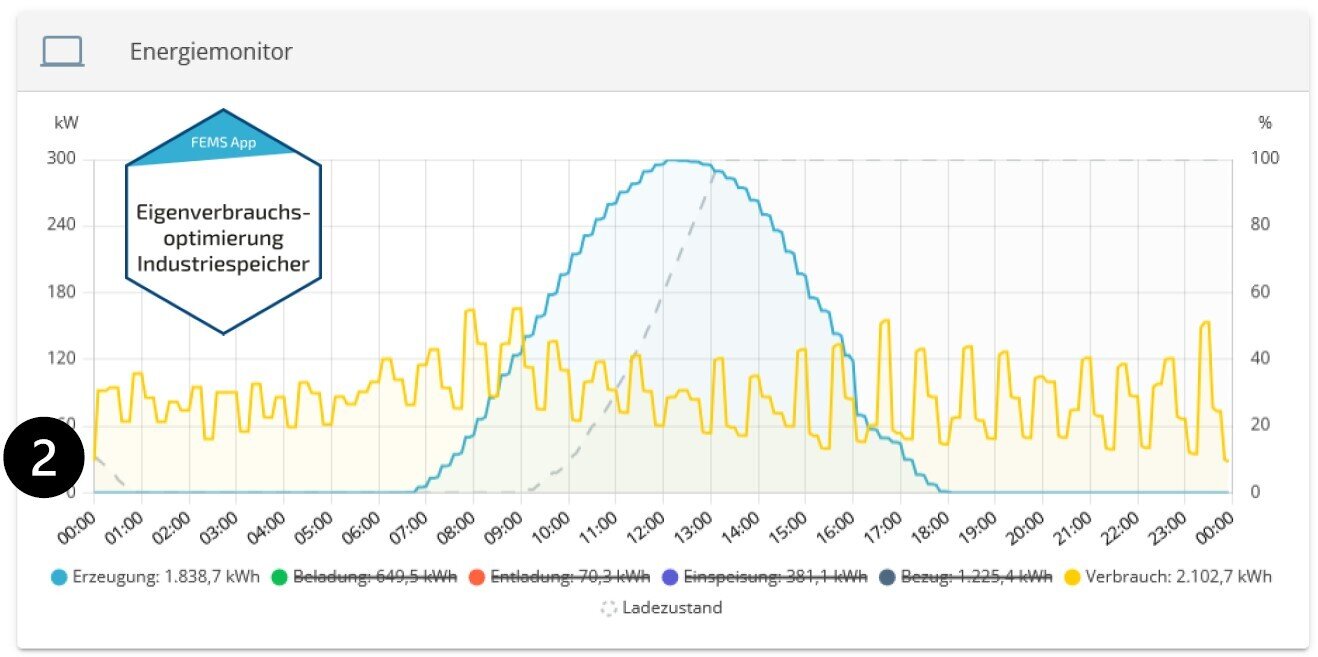
Solution:
|
|
|
|
Automatic Operation: Multi-Use with FEMS
-
Optimal utilization of the energy storage system
-
Greater savings through the combination of standard applications
-
Reduction of peak loads by 250 kW
-
Increase in the self-consumption rate to 95%
-
-
One-time setup, automatic operation
Case Study — Co-location Without Operating Electricity Costs
Background & Challenges:
|
Amortization
|
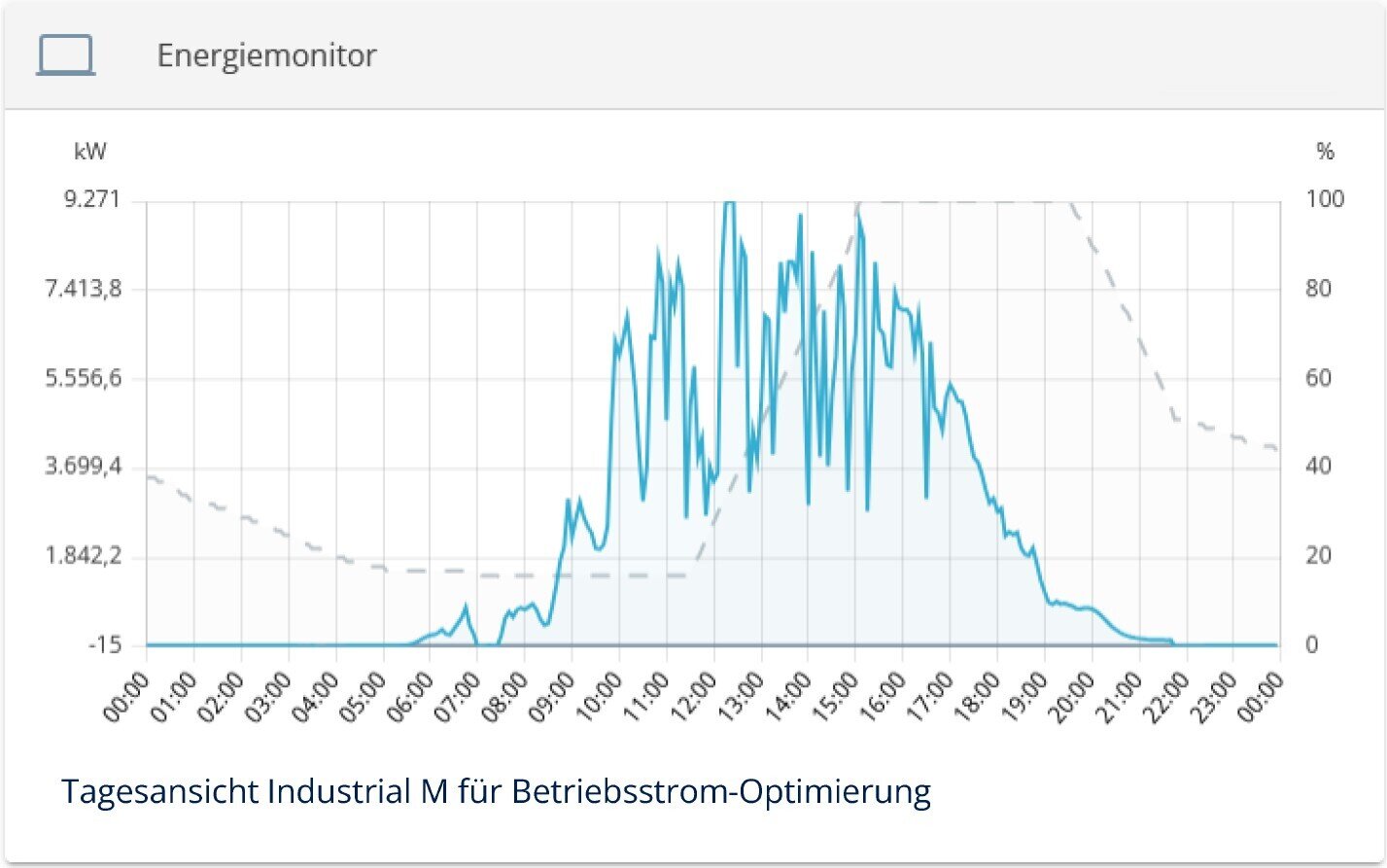
*Goal: Operational electricity bill = € 0* An auxiliary electrical energy storage system that charges slowly during the midday peak and shifts this energy to nighttime hours, when transformer losses occur and the facility’s cooling systems are running. At the same time, the electrical energy storage system feeds its “remaining” energy into the grid during the expensive evening hours. Solution: Industrial M with Multi-Use
|
|
3. Bedienung
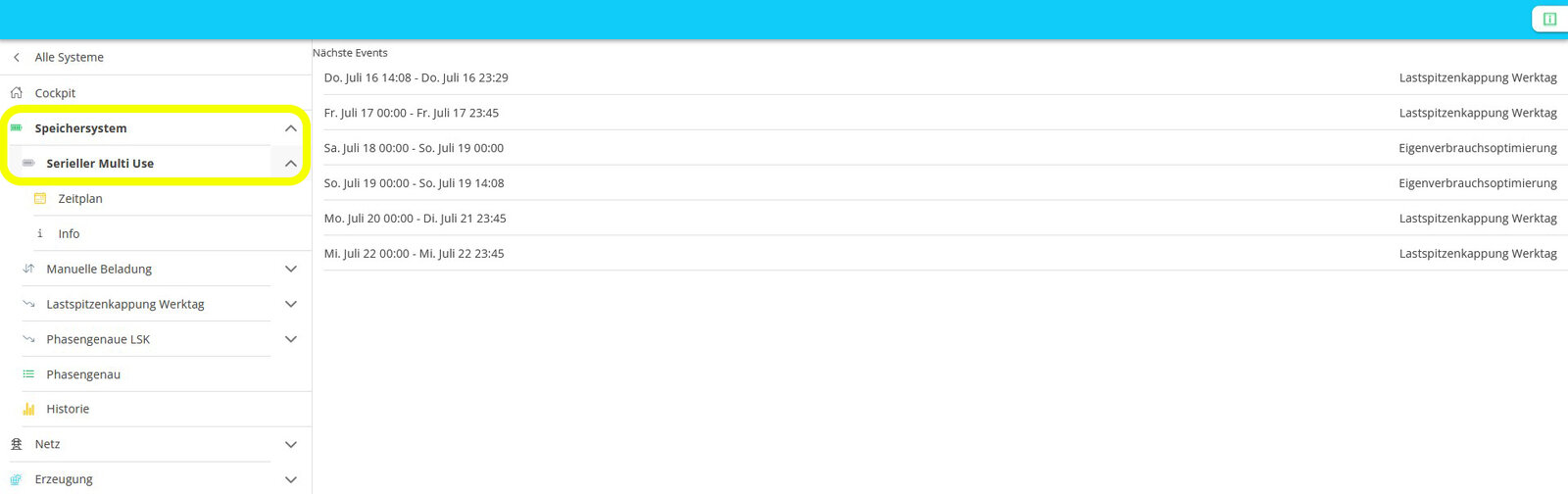
Klicken Sie auf den Seitenmenü-Chip Speichersystem und dann auf den Chip Serieller Multi-Use, um eine Übersicht über die festgelegten Aufgaben des Speichersystems zu erhalten:
Um die Aufgaben des Speichersystems zu bearbeiten, klicken Sie auf den Chip Zeitplan. Sie erhalten im Hauptfenster folgende Übersicht:
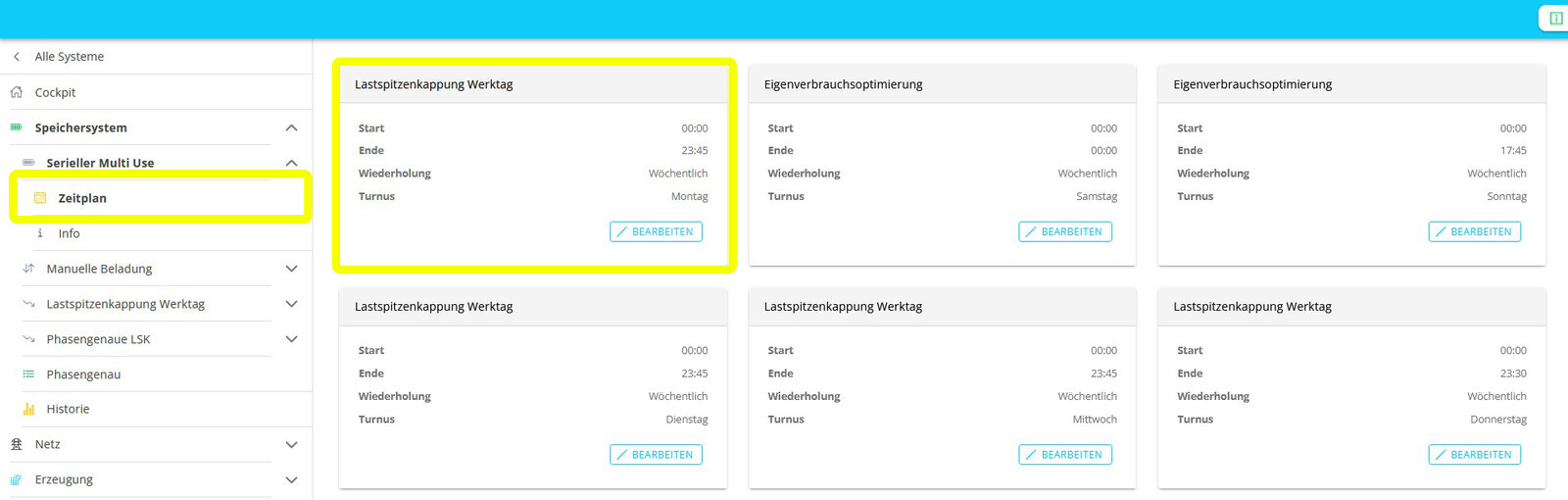
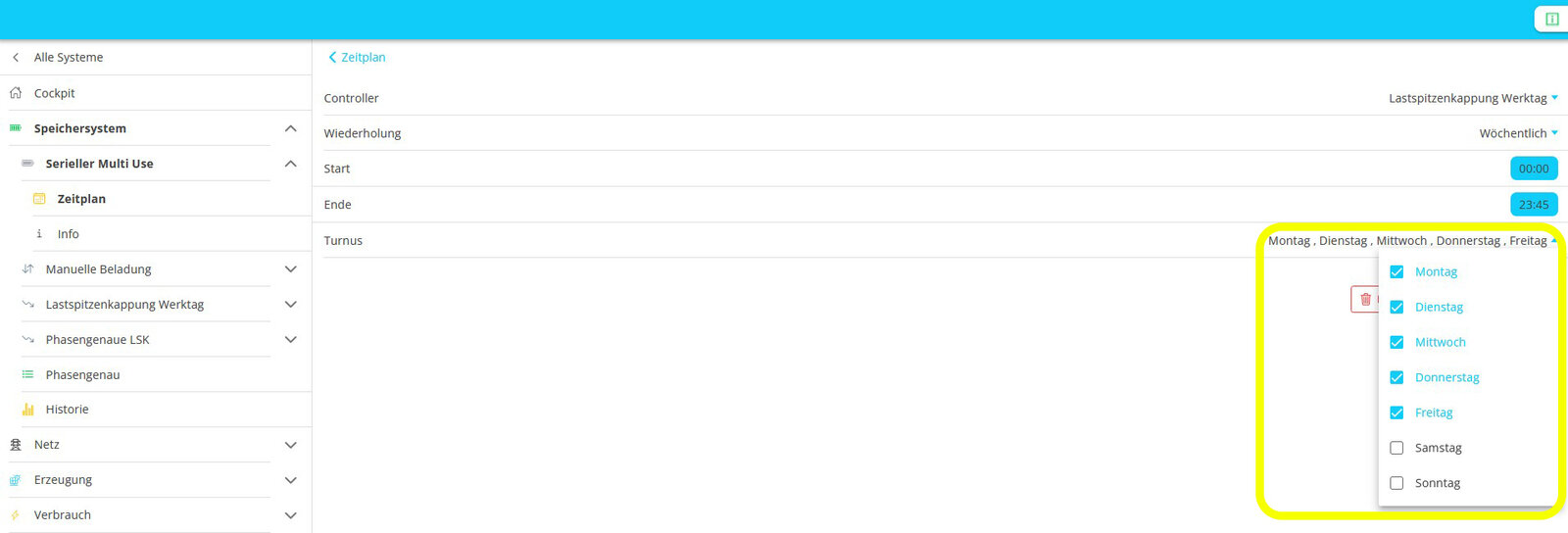
Klicken Sie auf Bearbeiten.
Hier passen Sie unter Controller die Art der Aufgabe, z. B. Manuelle Entladung, den Wiederholungsintervall, die Start- und Endzeiten sowie den Turnus an:
3.1. Festlegen der individuellen Leistungen
Bekannte Leistungseinstellungen werden weiterhin in den jeweiligen FEMS Apps unter dem Seitenmenü-Chip Speichersystem vorgenommen (hier am Beispiel Manuelle Be-/Entladung):
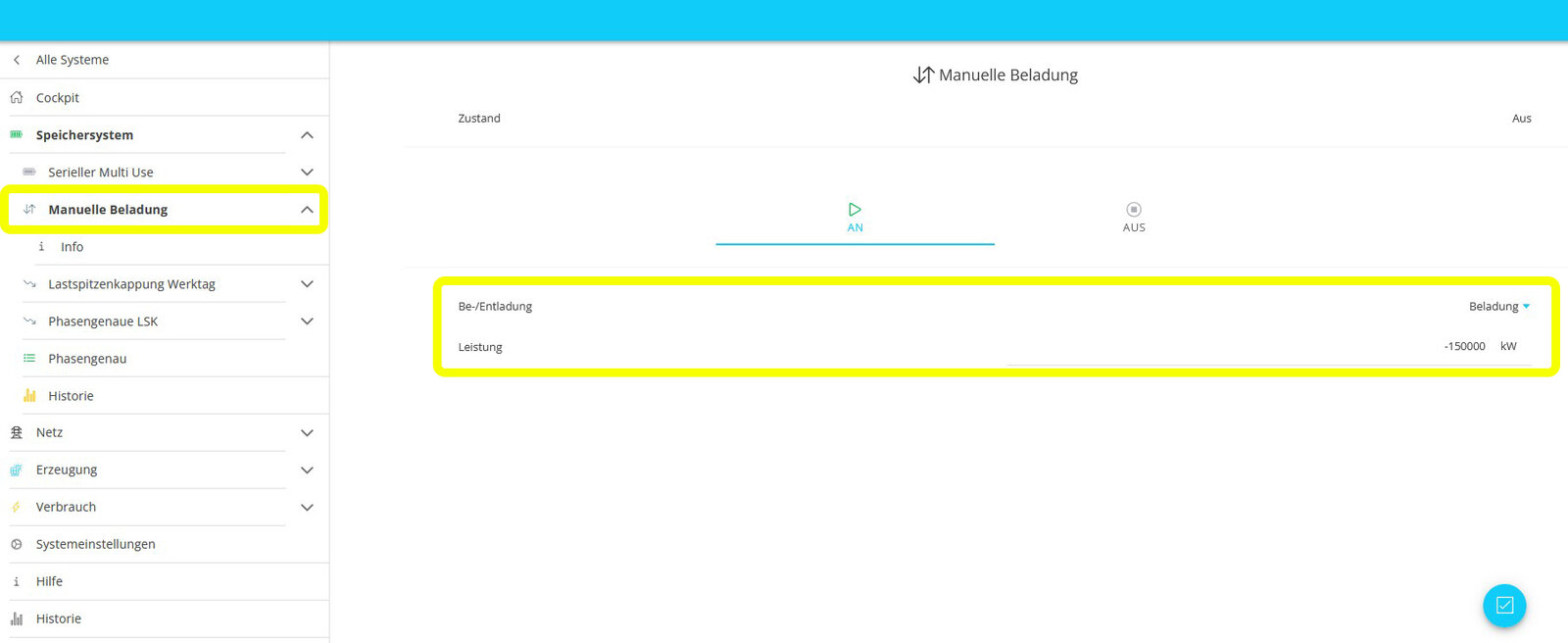
In folgenden FEMS Apps können die individuellen Leistungen festgelegt werden:
-
Manuelle Beladung
-
Manuelle Entladung
-
Lastspitzenkappung
-
Eigenverbrauchsoptimierung
FENECON konfiguriert die FEMS Apps nach Kundenwunsch. Es ist auch möglich, FEMS Apps mehrfach zu installieren. Bitte wenden Sie sich an Ihren Ansprechpartner unter projekt@fenecon.de.